


Yatzy Cards
FunCraft Games
I approached Yatzy Cards as a compact card game for the moments when I want a quick contest rather than a long strategy session. Developed by FunCraft Games, it turns the familiar yatzy idea into card-based duels, giving the game a more direct rhythm than traditional dice-and-score versions. It is free to start, rated for Everyone, and available for Android devices running at least Android 7.0.
That combination makes it easy to understand why the game has attracted attention. Its average rating sits at 4.9 from around 19 thousand ratings, while the Android listing shows over 100 thousand installs. Those figures suggest that the basic concept is landing well with players, although popularity alone does not tell me whether it will suit every type of card-game fan. My experience is that the appeal depends heavily on whether you enjoy short competitive rounds, repeated decisions, and a little pressure around making the best use of the cards in front of you.
How the card-based yatzy format feels in everyday play
The most important thing to understand is that this is not simply a digital copy of a classic yatzy score sheet. The card format changes how I think about each turn. Instead of treating every roll as an isolated chance event, I look at the cards available, consider which combination is becoming realistic, and decide whether to take a safe result or chase something more valuable. That makes the game feel more deliberate than its simple presentation might suggest.
For a new player, the rules are approachable because the central goal is familiar: build useful combinations and finish with the stronger result. I did not need a long tutorial to understand the broad purpose of a round. The challenge comes later, when basic knowledge is no longer enough and I have to judge risk. A modest combination may protect a lead, while a more ambitious choice can reverse a bad position. That tension is where the game earns its “duel” identity.
I find the format especially suitable for short breaks. A quick session can fit between errands, during a commute, or while waiting for an appointment. It does not demand the same uninterrupted attention as a long board-game match. At the same time, it is not completely mindless. If I play carelessly, the small decisions add up, and a round that looked comfortable can become difficult surprisingly quickly.
Related News






The strongest use case is one-on-one casual competition. I can imagine handing the phone to a friend and explaining the idea in a few minutes, then letting the rivalry develop naturally. It also works for someone who likes card games but wants more structure than a purely luck-driven match. The combinations give each turn a target, while the duel framing keeps the focus on the opponent instead of only on my own score.
Where the pace feels strongest
Perceived speed is one of the game’s advantages. The card-based format gives each decision a clear purpose, so I spend less time sorting through a large ruleset and more time choosing between immediately understandable options. When I already know what combination I am trying to create, a turn can feel brisk. That makes the game comfortable for repeated short sessions rather than a single extended sitting.
The pace also depends on how seriously I play. A relaxed match moves naturally because I can make an instinctive choice and continue. A closer duel slows down as I compare the possible value of a safe play with the chance of a stronger combination. I do not see that as a performance problem; it is the intended decision-making layer. Still, someone looking for an instant-action card game may find the pauses between choices more thoughtful than expected.
Gallery
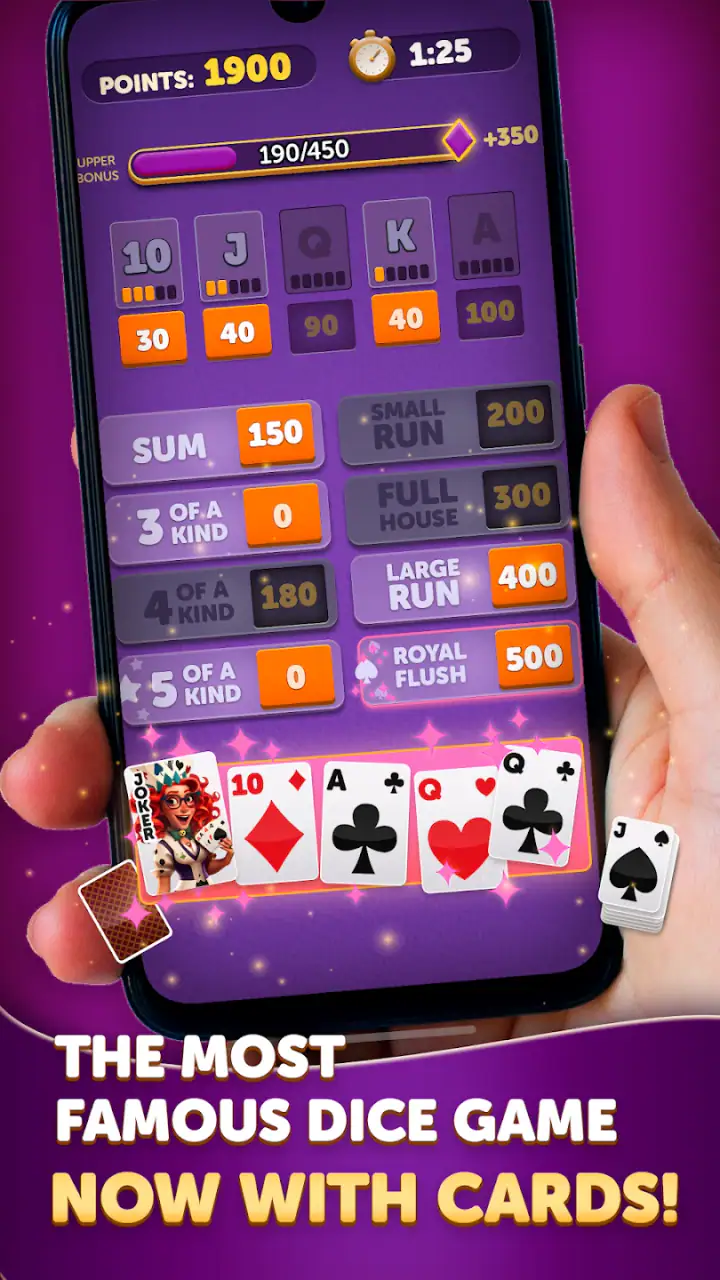
One useful habit is to decide what kind of turn I am having before touching the next card: recovery, protection, or attack. In a recovery turn, I accept a reasonable result rather than wasting options on a low-probability outcome. In a protection turn, I preserve a lead. In an attack turn, I accept more risk because falling behind already requires a change of plan. This simple classification helps keep the game moving and prevents me from repeatedly reconsidering the same choice.
That approach is also helpful on a smaller phone screen, where unnecessary hesitation can make a simple game feel more cumbersome. I pay attention to the visible combination, make the decision, and keep the round flowing. The game’s best rhythm comes from treating each turn as a small problem with a time limit I set for myself, not as an invitation to calculate every possible outcome.
What happens during heavier use
Repeated play reveals more than a first match does. In a single round, the design feels light because the action is focused on cards and combinations. After several duels, the main test becomes mental rather than technical: can I keep making sensible choices without falling into automatic play? The game is easy to start, but the same compact structure can become repetitive if I expect a large variety of modes or a constantly changing ruleset.
This is where I would separate a short-session player from a dedicated grinder. For occasional use, the focused format is a benefit. I can play, finish a duel, and put the phone away without feeling that I have entered a major commitment. For someone planning a long uninterrupted session, the limited central idea may eventually feel narrow. The game is strongest when I appreciate refinement of one format rather than a huge collection of unrelated activities.
During a longer run of matches, I also notice how valuable it is to stop after a frustrating loss. Because the game is built around close choices and chance, chasing a bad result can lead me to take increasingly desperate decisions. A practical workflow is to review the last turn mentally, identify whether the mistake was poor risk management or simply an unlucky outcome, and then take a short break. That keeps the next match from becoming an emotional attempt to recover immediately.
Another non-obvious trade-off is that the same simplicity that helps the game start quickly can make mistakes feel more personal. There are not many layers to blame. If I choose an overly ambitious combination and it fails, I usually understand what happened. That clarity is satisfying when I make a good decision, but it can be uncomfortable for players who prefer games with more team roles, deck-building, or strategic systems to soften the effect of one turn.
Stability and recovering from interruptions
My reliability expectations for a game like this are straightforward: it should open without drama, keep the duel understandable, and avoid making a short match feel fragile. The current Android version is 1.0.24933, and the game has a relatively modest minimum requirement of Android 7.0. That broad compatibility is useful for people who keep an older phone as a secondary device or do not upgrade frequently.
I would still treat recovery as part of normal mobile use. A phone call, a notification, or an accidental swipe can interrupt any match. My practical advice is to avoid beginning a duel when I know I will need to switch between apps repeatedly. Short games are convenient, but convenience does not mean every interruption is harmless. I prefer to finish a turn before locking the screen or moving to another task, because a half-completed decision is harder to reconstruct than a completed one.
The game’s focused design should help it feel less demanding than a visually dense action title, but I would not confuse a simple card table with unlimited resilience. Device condition, available memory, and the age of the operating system can all affect how any mobile game behaves. On a well-maintained phone, I would expect the central experience to be relatively easy to handle; on an older device already struggling with several open apps, closing background tasks before playing is a sensible precaution.
There is also a human side to recovery. If a duel ends badly, I can usually understand the result because the game revolves around visible card decisions rather than a complicated chain of hidden systems. That makes it easier to learn from a loss. I can ask whether I protected a lead too early, chased a combination without enough support, or failed to adapt when the opponent’s position changed. Even when the outcome is disappointing, the next match has a clear lesson attached to it.
Device limits, cost, and who should play
The game is free, which removes the biggest barrier to trying it. Optional in-app purchases range from $0.99 to $19.99 per item, so I would approach the store section with the same care I use in any free-to-play game. The sensible route is to play enough matches first to decide whether the core duel is enjoyable before spending anything. If the basic loop does not hold my attention, a purchase will not solve that problem.
The Everyone content rating makes it a reasonable choice for a broad audience, particularly families looking for a simple competitive card game. Even so, younger players may need guidance around optional purchases, as they do with other free games. The fact that the rules are approachable does not automatically make every spending decision obvious, so I would keep purchase controls in mind when sharing a device.
Android 7.0 support is a practical strength for compatibility, but the minimum operating system should not be read as a promise that every old phone will feel equally comfortable. Screen size matters for card visibility and touch accuracy. On a small display, I would hold the phone in a stable position and avoid playing while walking. That sounds basic, but card decisions are easier when I can inspect the layout without rushing or tapping the wrong area.
Resource demands are best judged by the game’s narrow focus rather than by assumptions about exact battery or memory use. It is not presented as a graphically heavy action game, so its card-table structure should appeal to players who want something lighter in feel. Still, I would not claim that every device will use the same amount of power or perform identically. If battery life is critical, playing shorter sessions and checking the phone’s own battery tools is more reliable than guessing from the genre.
This is a good fit for someone who wants a compact card game with recognizable scoring ideas and enough decision-making to reward attention. It is also suitable for players who enjoy friendly rivalry but do not want to study a large deck or memorize a complicated rules manual. I would recommend it to a friend who likes quick rounds, accepts some luck, and enjoys improving through repeated choices.
I would skip it if my priority were a deep collectible-card system, a long campaign, real-time action, or extensive customization. Traditional yatzy may be better for someone who wants the familiar dice experience without a duel-oriented presentation. A more elaborate strategy card game will offer greater long-term variety for players who enjoy deck construction and layered planning. This title is not trying to replace those experiences; its appeal is in keeping the contest focused.
Small habits that improve the experience
My first tip is to resist treating every strong-looking possibility as an obligation. A promising combination is not automatically the correct play if it leaves the rest of the round too weak. I get better results when I consider what the turn contributes to the whole duel rather than celebrating one attractive card arrangement in isolation.
My second tip is to use the opponent’s position as a reason to change risk, not as a reason to panic. When I am ahead, the safest useful result often has more value than a spectacular attempt. When I am behind, I need a realistic recovery plan rather than random aggression. This is a small distinction, but it prevents the common mistake of playing the same way regardless of the score.
My third tip is to separate learning sessions from score-chasing sessions. In a learning session, I deliberately test a less familiar choice and observe how it affects the rest of the duel. In a score-chasing session, I use the patterns I already trust and avoid experiments. That makes repeated play feel more purposeful and helps me tell the difference between a bad strategy and an unlucky result.
I also recommend playing with a stable connection and a charged enough phone when I plan to complete several duels. That is not a claim about a particular network requirement; it is simply good mobile practice. A short game becomes inconvenient when I start it while switching between weak signal areas, low battery, and several demanding apps. Preparing the device takes little effort and keeps the focus on the cards.
My performance verdict after living with the format
Yatzy Cards succeeds because it understands the value of a narrow, readable idea. The card-based yatzy structure gives me quick access to a duel while still asking me to judge risk, protect good positions, and recover intelligently. Its free entry, Everyone rating, and support for Android 7.0 make it easy to try on a wide range of devices, and FunCraft Games has chosen a format that does not require a large time commitment.
The limitations are just as clear. The focused design may not satisfy players who need constant novelty, deep collection systems, or a substantial single-player journey. Repeated matches can also expose the narrowness of the format, especially if I play for a long stretch without breaks. Optional purchases mean I should make spending decisions carefully, and older devices may still benefit from basic preparation even though the minimum operating system is relatively accessible.
Overall, I see it as a dependable choice for short competitive sessions rather than an all-purpose card-game replacement. The best reason to install it is not the impressive rating alone, but the way its simple premise creates meaningful little decisions. If I want a quick duel that I can understand immediately and improve at over time, I would recommend giving it a try. If I want a broad, content-heavy card experience, I would look elsewhere.
My final recommendation: choose it for focused card duels, easy entry, and thoughtful risk management; skip it when variety, long campaigns, or complex deck strategy matter more than a clean and compact yatzy-inspired match.
FAQs for Yatzy Cards
What is Yatzy Cards, and how is the game played?
Yatzy Cards is a dice-based game that combines classic Yatzy scoring with a card-style presentation. Players roll dice, choose which results to keep, and try to complete scoring combinations such as pairs, three-of-a-kind, full houses, straights, and five-of-a-kind. Each turn requires strategic decisions because the available rolls and scoring categories are limited.
Can I play Yatzy Cards offline or without creating an account?
Availability of offline play and account requirements may depend on the version installed and the platform you use. In general, it is worth checking the game’s first-launch screens before downloading if you want to play without registration. Some features, such as online competitions, cloud saves, advertisements, or leaderboards, may require an internet connection or an account.
Does Yatzy Cards support multiplayer gameplay?
Yatzy Cards may offer more than one way to play, depending on the current release, including solo games, computer-controlled opponents, local play, or online challenges. Before installing, check the store description for the exact multiplayer options available on Android or iOS. Online modes can also require a stable connection and may use separate matchmaking or invitation systems.
Is Yatzy Cards free to download, and does it contain advertisements or in-app purchases?
The game may be free to install while still including advertising, optional purchases, or premium features. These can include removing ads, unlocking additional content, buying virtual items, or accessing special game modes. Review the Google Play or App Store listing for the latest pricing information, and check your device’s purchase settings if children may use the application.
What should I check before downloading Yatzy Cards on my device?
Before downloading Yatzy Cards, check that your phone or tablet meets the required operating-system version and has enough free storage. It is also useful to review the permissions requested, privacy information, recent user reviews, and whether the game receives regular updates. Players who prefer uninterrupted sessions should additionally confirm its internet, advertising, and in-app purchase requirements.
Pros
- Quick rounds make it easy to play during short breaks.
- Simple rules are suitable for both beginners and casual players.
- Dice and card visuals are clear on small phone screens.
- Provides a relaxing alternative to more complex strategy games.
- Works well for players who enjoy luck-based tabletop experiences.
Cons
- Luck can strongly influence results
- reducing the sense of control.
- Limited strategic depth may feel repetitive after extended play.
- May offer little appeal to users unfamiliar with classic Yatzy.
- Small interface elements can be inconvenient on compact displays.
- Replay value may depend heavily on available modes and opponents.


